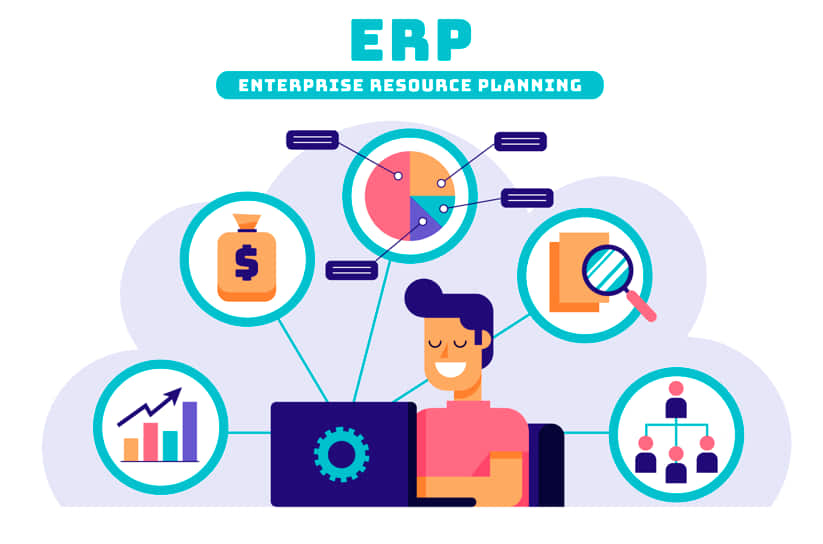
In today’s competitive business environment, organizations need efficient tools to manage operations, improve productivity, and make informed decisions. One of the most powerful solutions available is Enterprise Resource Planning (ERP) software. ERP systems help businesses integrate various departments into a single platform, allowing them to streamline processes and increase overall efficiency.
Understanding ERP Software
Enterprise Resource Planning (ERP) software is a centralized business management system that connects core business functions such as finance, human resources, inventory, procurement, manufacturing, sales, and customer service. Instead of using separate applications for each department, an ERP system stores all business data in a single database, ensuring consistency and real-time access to information.
By eliminating data silos, ERP software enables organizations to improve collaboration, reduce manual work, and enhance operational performance.
How ERP Software Works
ERP software collects data from different business activities and processes it through integrated modules. Each department can access the information they need while sharing accurate data with other teams.
For example, when a customer places an order, the sales department records the transaction. The inventory module automatically updates stock levels, the finance module generates an invoice, and the shipping department receives fulfillment instructions. This seamless workflow minimizes errors and saves valuable time.
Key Features of ERP Software
Modern ERP solutions typically include the following modules:
- Financial Management
- Inventory and Warehouse Management
- Supply Chain Management
- Procurement Management
- Manufacturing Planning
- Human Resources Management
- Customer Relationship Management (CRM)
- Business Intelligence and Reporting
Many cloud-based ERP platforms also provide artificial intelligence (AI), automation, predictive analytics, and mobile accessibility.
Benefits of ERP Software
Implementing ERP software offers numerous advantages for businesses of all sizes.
Improved Productivity
Automation reduces repetitive tasks and allows employees to focus on strategic activities that create value.
Better Decision-Making
Real-time dashboards and analytics provide managers with accurate insights for faster and smarter business decisions.
Cost Reduction
ERP systems help reduce operational expenses by minimizing manual processes, eliminating duplicate data, and optimizing resource utilization.
Enhanced Collaboration
Since every department works within the same system, communication becomes faster and more efficient.
Scalability
As businesses grow, ERP software can expand by adding new users, modules, and functionalities without replacing the entire system.
Who Should Use ERP Software?
ERP software is suitable for businesses across various industries, including manufacturing, retail, healthcare, logistics, construction, education, and professional services.
Small and medium-sized businesses (SMBs) increasingly adopt cloud ERP solutions because they offer lower implementation costs and flexible subscription pricing. Large enterprises benefit from advanced customization, automation, and enterprise-level security.
Cloud ERP vs. On-Premise ERP
Businesses can choose between cloud-based ERP and on-premise ERP systems.
Cloud ERP is hosted by the software provider and accessed through the internet. It requires minimal hardware investment, automatic updates, and offers greater flexibility.
On-premise ERP is installed on a company’s own servers, providing greater control over data and infrastructure. However, it usually involves higher upfront costs and ongoing maintenance responsibilities.
Conclusion
ERP software has become an essential technology for organizations seeking greater efficiency, improved collaboration, and sustainable growth. By integrating critical business processes into one unified platform, ERP systems help companies reduce costs, increase productivity, and make data-driven decisions with confidence.
Whether you operate a small startup or a multinational enterprise, investing in the right ERP software can transform your business operations and provide a strong competitive advantage in today’s rapidly evolving digital economy.